

gINKgo I The RARE Newsletter I Beyond Safaris: Discover Tipeshwar, Mah. I Vol 118 I February 2026

Dear Travellers...
Looks like summer is early this time. Writing in from Delhi, I realise this has become my standard opening line for RARE's Summer promotions over the past few years. Someone said it's because Holi is early — and I'd like to believe that as the only reason.
The annual rush to the top spots is expected, and at RARE, we'd like to rethink what we are promoting, and when. Smaller places, longer stays, keeping off highways and skipping busy weeks and crowded hubs may well be a wiser way to plan a summer vacation. April remains excellent for wildlife viewing in central India, while Rajasthan in the monsoon is every travel poet's muse — especially RARE Destinations like Ramathra Fort, RAAS Devigarh, Shahpura Bagh, and Udaipur.
If it is Ladakh, April is a good time to visit — the 'Chulli' trees are in full bloom, trans-Himalayan wildlife begins to stir, and you will still need your favourite puffer jacket. Spring is beckoning in the lower Himalayas too, where Kangra, Kullu, Kumaon and Darjeeling each have a RARE address. In Nepal, Pokhara makes for an excellent long stay, especially for hikers who prefer to be away from the busy Phewa lakeside.
We are especially thrilled to welcome The Doksa in Spiti Valley — not just as a new destination, but as a reflection of young hoteliers Bharat and Mohit's commitment to sensitive tourism, open to you this summer. And don't forget Kashmir needs your special attention this year, as we vie for a revival of tourism - Nadis, Qayam Gah and Sukoon Houseboat continue to be exceptional stays. Snow Leopard Lodge in Ulley, meanwhile, reframes summer tourism in Ladakh through wildflowers, hiking and overnight camping.
And the rest of The RARE Collection remains open to you through summer and monsoon alike — in hues rarely seen in the so-called 'season' — perfect for festivals, processions, art residencies and retreats.
Shoba Rudra
Storyteller & Boutique Hotels OG

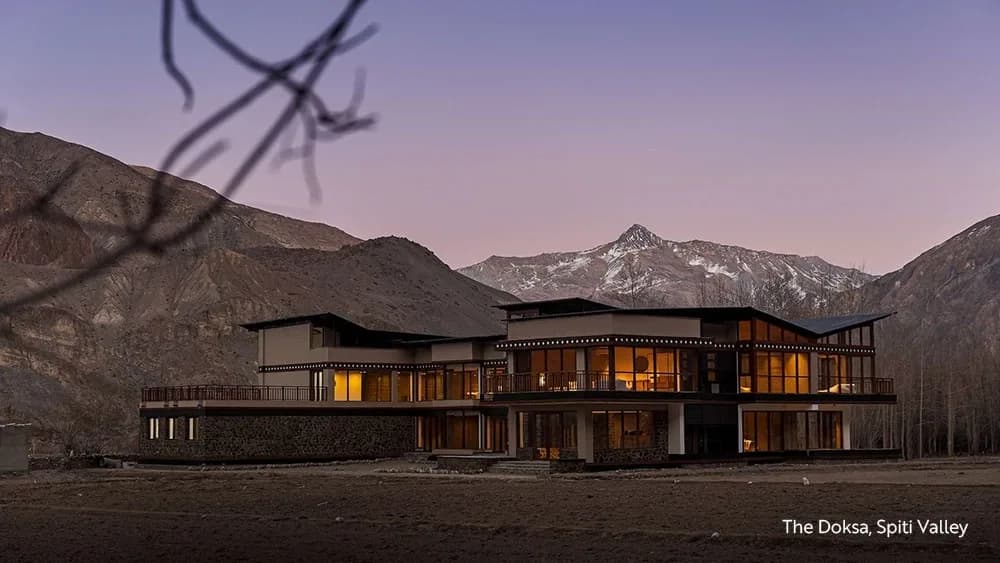
Introducing The Doksa, Spiti Valley
Located in Mane village between Tabo and Kaza, about 5 kilometres off the main Spiti highway, The Doksa sits at 12,000 feet in Spiti's stark high-altitude desert, part of India's first Cold Desert Biosphere Reserve under UNESCO's 'Man and the Biosphere' Programme.
In a region often treated as a transit point, The Doksa reframes Spiti as a destination for depth and solitude. Conceived and owner–run by Mohit and Bharat — whose backgrounds span maritime engineering, high-altitude exploration and experiential travel — the ten-room (expanding to twelve) boutique farmstay is built with climate-conscious intent: 18-inch rammed earth walls, a snowmelt-harvesting butterfly roof and passive solar vernacular design engineered for winters that can fall to –22°C.
Dining at Tshera follows a seasonal, responsibly sourced approach, with curated set meals served against views of the Manirang Massif. Experiences remain destination-led and immersive — village walks in Mane, sharing a homestay meal, stargazing under clear trans-Himalayan skies, cycling, art sessions, rock climbing and overnight camping — each encouraging meaningful engagement with Spiti's landscape and community.
A RARE Ladakh Summer
11-night journey that prioritizes acclimatisation, geographic progression, and meaningful engagement with Ladakh's cultural and natural landscape.
Duration of Stay: 11 nights and 12 days
Ideal Season: Late May to September

The journey begins with two nights at Nimmu House in Nimmu village, Ladakh, allowing for essential acclimatisation at a lower altitude. Explore the Indus–Zanskar confluence, visit Basgo Monastery, and take village hikes to adjust gradually before ascending further.
From Nimmu, drive across Khardung La into Nubra Valley for a two-night stay at Lchang Nang Retreat. Visits include Diskit Monastery, Hunder's sand dunes, and surrounding villages, balancing landscape exploration with cultural context.
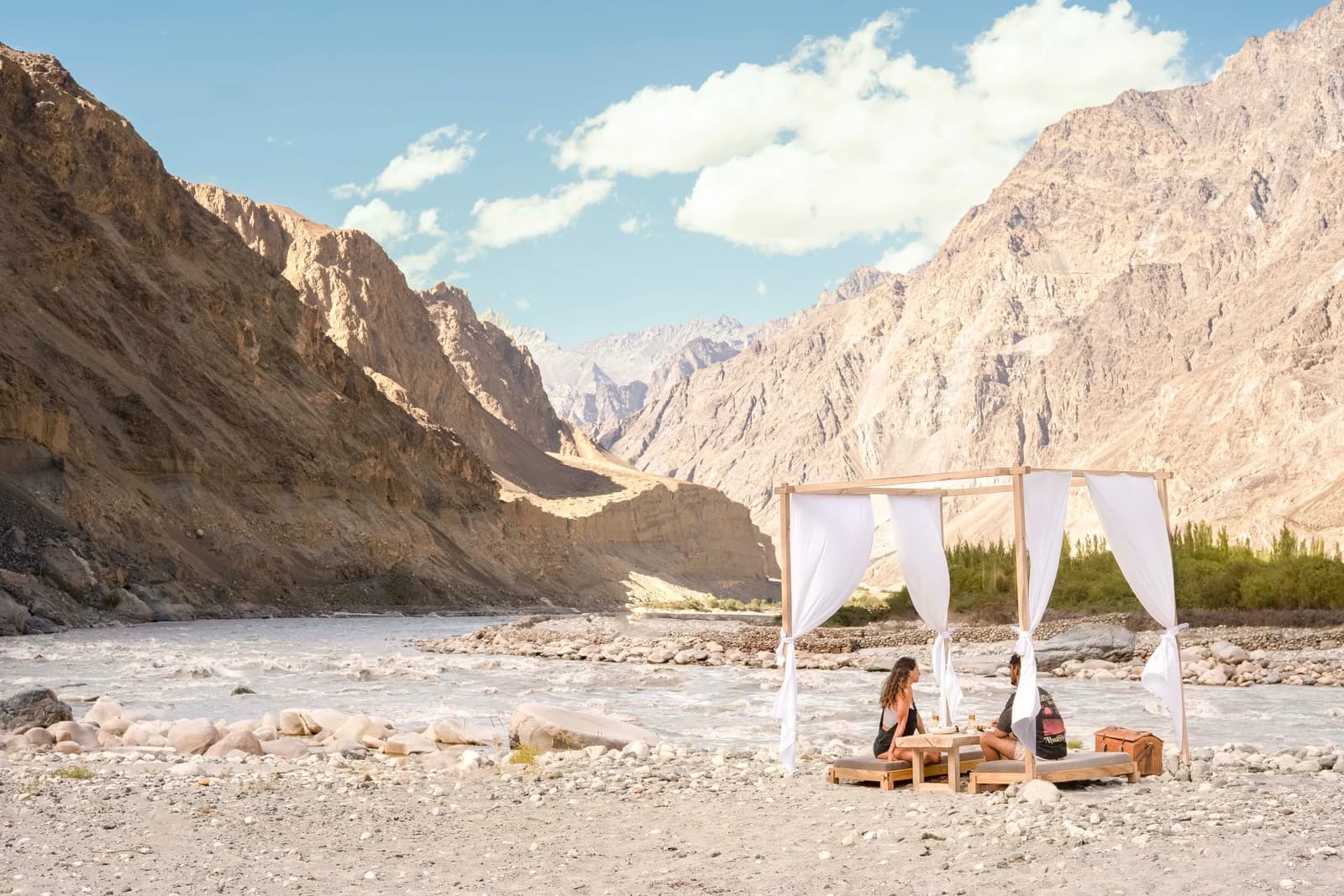
Continue along the Shyok River to Turtuk for two nights at Virsa Baltistan, where the Balti heritage, traditional architecture, and slower pace provide insight into a distinct cultural pocket of Ladakh.
The next three nights are spent in Ulley at Snow Leopard Lodge. The journey concludes with two nights in Leh at The Grand Dragon, allowing time to explore the old town, markets and monasteries before departure.


Snow Leopard Lodge Ulley is now open through the summers, not only as a link between Sham Valley (a well known hub for wildlife) and Leh, but also as an added experience that builds into a three nights stay - wildlife tracking - you can see anything from Urial, Ibex, Foxes, Wolves and Snow leopards to Birds and wild flowers of the trans Himalayas. The team here will organise day hikes, and explorations to villages, monasteries and other cultural and historical sites. Option for overnight camping under the stars can also be arranged. An individual program may begin with two nights stay in Grand Dragon in Leh and three to four nights at Ulley at the Snow Leopard Lodge.
Summer Activities:
- Wildlife viewing on foot or in vehicles, depending on the sighting
- High-pasture camping beneath impossible skies
- Village hikes to Hemis Sukhpachen, Yangthang, Saspochey, etc
- Monastery visits — Likir, Alchi, Lamayuru, Mangyu
- Mountain cycling on dirt tracks
- Birdwatching: Golden Eagles performing their courtship display
- Nature walks to see the summer wildflowers










-320x320.webp&w=3840&q=75)
-320x320.webp&w=3840&q=75)

-320x320.webp&w=3840&q=75)