

Sustainability Story of The Doksa
The Doksa is shaped by the severe intelligence of Spiti. In this high-altitude cold desert, nothing careless lasts long. Water, warmth, materials, and movement all have to be thought through, which makes the property’s Pinwheel story especially compelling.
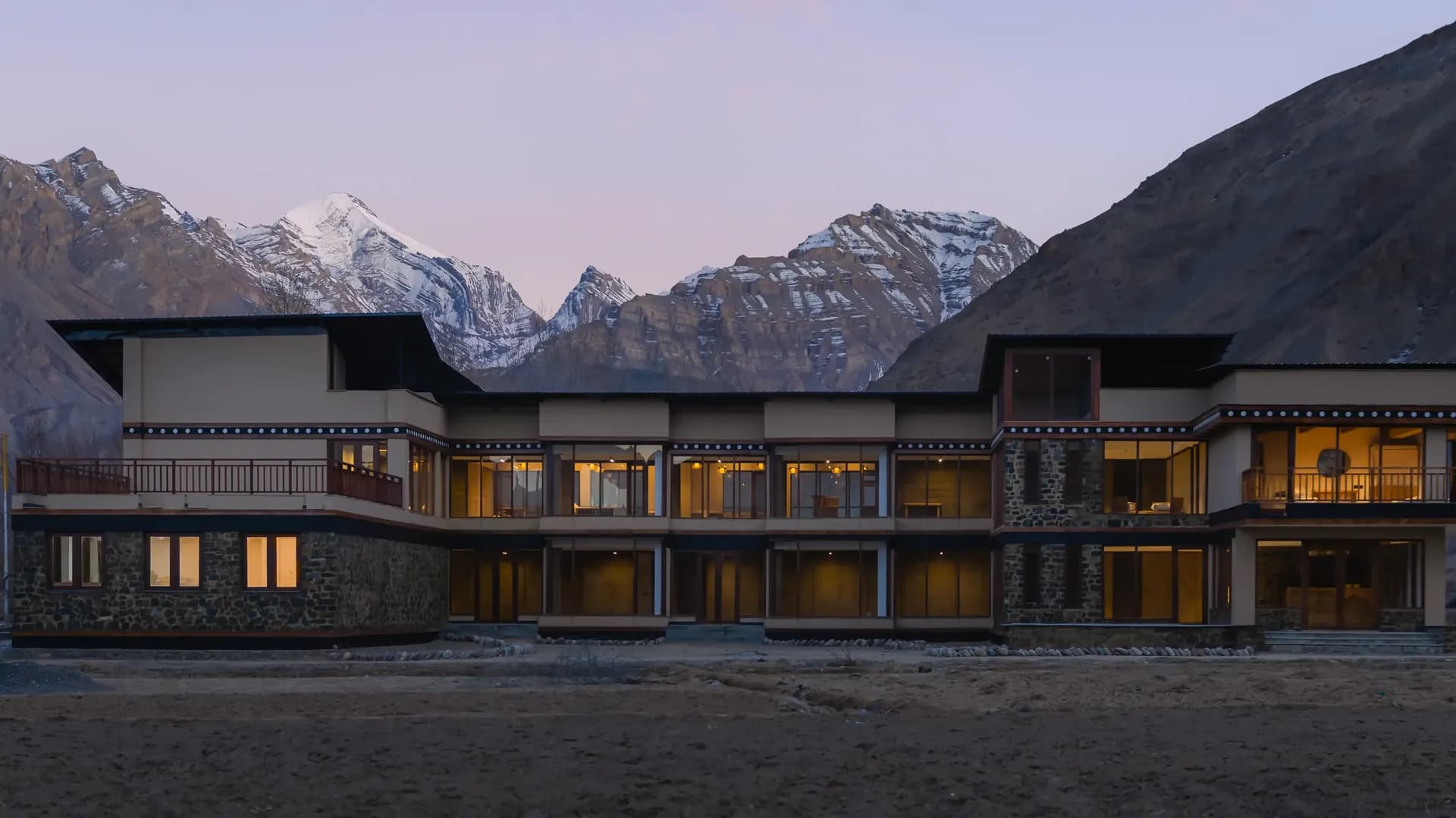
Designed with passive solar architecture, The Doksa responds to Spiti’s sun, altitude, and cold climate rather than fighting them. This reduces dependence on mechanical heating and makes the building an act of adaptation. Snowmelt water harvesting further anchors the stay in the realities of the landscape, where water is seasonal, precious, and inseparable from mountain ecology.
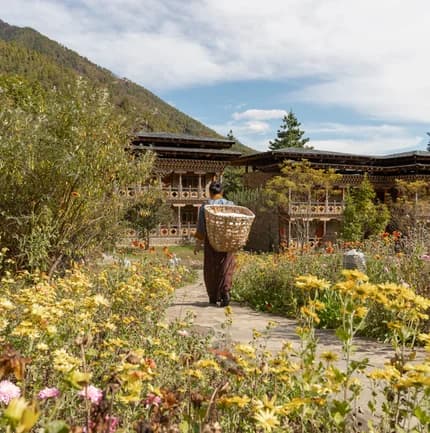
The name “Doksa” refers to a seasonal pastoral settlement used by nomadic herders in Spiti. This gives the stay a cultural resonance that extends beyond design. Set amid pea plantations in Mane village, it introduces guests to Spiti through village walks, monastery visits, farm experiences, rammed-earth architecture, and slow travel.
Here, light footprint tourism is not an aesthetic. It is an ethic. The Doksa understands that in Spiti, restraint is not a luxury mood. It is survival, translated beautifully into hospitality.